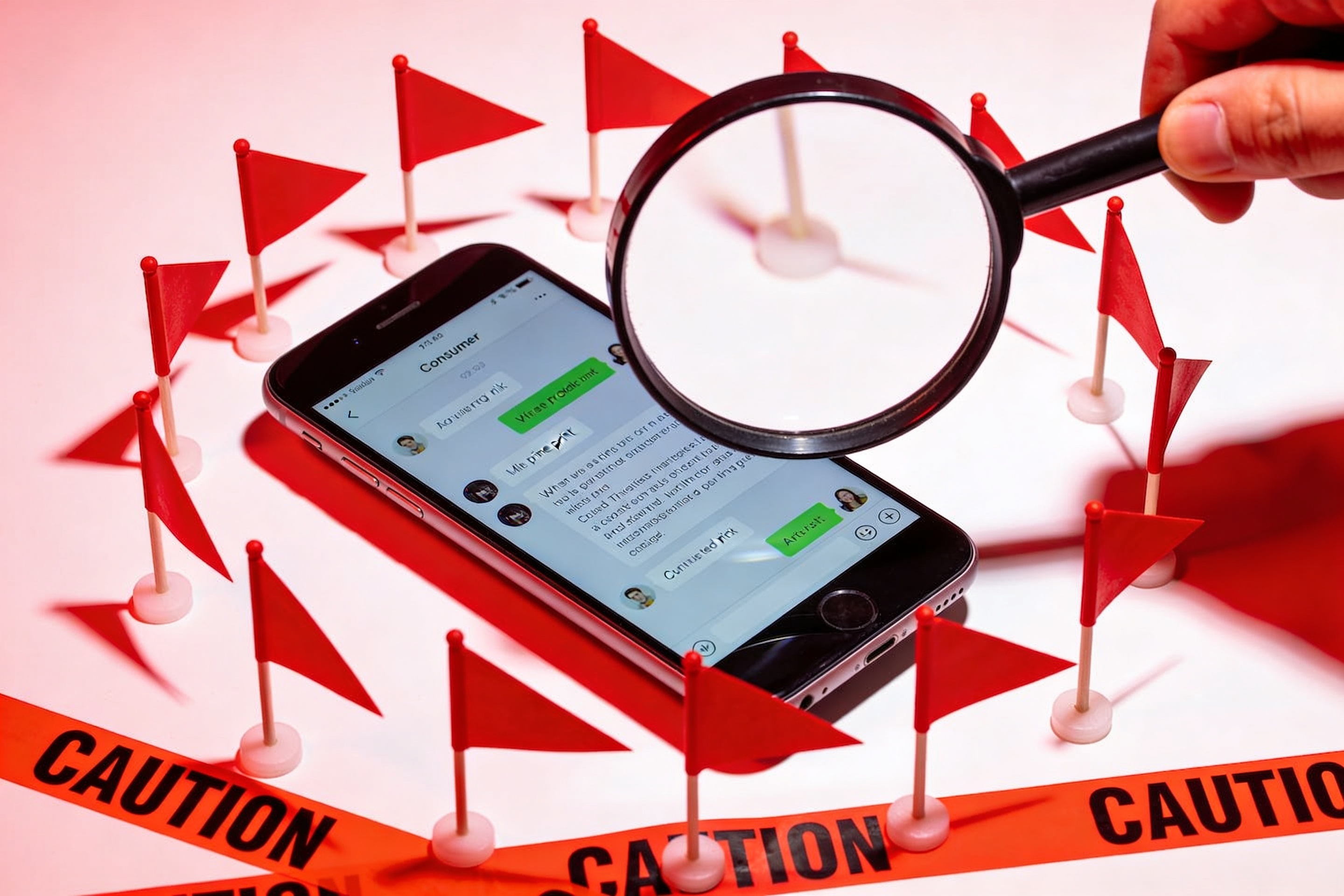
Not every AI girlfriend app deserves your time or money. After testing 11 major platforms, we identified seven red flags that consistently predict a bad experience. Each one comes with a real example.
🚩 1. Data Breach History
Example: Muah AI
Muah AI suffered a data breach that exposed user data. For an app where people share intimate, personal conversations, this is catastrophic. Before signing up for any AI companion app, search "[app name] data breach" — if results come up, think twice.
🚩 2. Token Systems on Top of Subscriptions
Example: Candy AI
Candy AI charges $12.99/month for unlimited text, then charges additional tokens for image generation (4 tokens/image) and voice calls (3 tokens/minute). The features they advertise most prominently — images and voice — cost extra. If an app has both a subscription AND a token system, calculate your real monthly cost before subscribing.
🚩 3. Weekly Pricing That Costs More Than Monthly
Example: Kupid AI
Kupid AI's weekly plan at $12.99/week costs ~$52/month — more than their $49.99/month Elite tier. Weekly plans are designed to look cheap while being the most expensive option. Always multiply weekly prices by 4.3 to get the real monthly cost.
🚩 4. Free Tier That Can't Actually Be Evaluated
Example: Kupid AI, Candy AI
Kupid AI's free tier has no persistent memory — the AI forgets everything between sessions. Candy AI gives you roughly 100 messages before cutting you off. Neither lets you meaningfully evaluate the experience. A good free tier should let you understand what you're paying for. If it doesn't, the app is hiding something.
🚩 5. No Age Verification Despite Romantic/Adult Content
Example: Multiple apps
Several AI girlfriend apps offer romantic or explicit content with nothing more than a checkbox for age verification. This is both an ethical concern and a sign that the company isn't taking safety seriously. Apps with proper age verification (even if imperfect) show more responsibility.
🚩 6. Vague Privacy Policies
Example: DreamGF
DreamGF's privacy policy lacks specific details about data handling. Compare this to EVA AI, which is EU-registered with explicit GDPR compliance, or Nomi AI, which clearly states no data training. If a privacy policy is vague about encryption, data training, and third-party sharing, assume the worst.
🚩 7. Platform Instability
Example: Muah AI
Platform crashes that cause conversation data loss are unacceptable for an app built around ongoing relationships. If users report frequent crashes, data loss, or extended downtime, the platform isn't ready for your investment of time or money.
Green Flags to Look For
- Transparent pricing with no hidden token costs
- Meaningful free tier that lets you evaluate the experience
- Clear privacy policy with specific encryption and data training details
- EU registration or GDPR compliance (EVA AI)
- No data breach history
- Stable platform with consistent uptime
Our Trust Rankings
| App | Pricing Transparency | Privacy | Stability | Trust Score |
|---|---|---|---|---|
| Veridia | ✅ Free | ✅ E2E encryption | ✅ | ⭐⭐⭐⭐⭐ |
| Character.AI | ✅ Clear | ⚠️ Data training | ✅ | ⭐⭐⭐⭐ |
| EVA AI | ✅ Clear | ✅ GDPR | ✅ | ⭐⭐⭐⭐ |
| Nomi AI | ✅ Clear | ✅ No training | ✅ | ⭐⭐⭐⭐ |
| Replika | ⚠️ Feature locks | ⚠️ Opt-out training | ✅ | ⭐⭐⭐ |
| Candy AI | ❌ Token trap | ⚠️ Unknown | ✅ | ⭐⭐ |
| Kupid AI | ❌ Weekly trap | ⚠️ Limited info | ✅ | ⭐⭐ |
| Muah AI | ⚠️ Tier jump | ❌ Data breach | ❌ | ⭐ |
The Biggest Red Flag Is Vague Risk Language
Be careful when an app markets itself as emotionally healing, completely private, uncensored, and frictionless all at once. Those claims pull in different directions. Emotional support requires safety escalation, privacy requires clear data limits, and unrestricted generation requires strong age gates and abuse prevention. If a company promises all upside with no tradeoffs, read the policy pages before paying.
Another practical red flag: no clear deletion path. If you cannot find out how to delete your account, export data, cancel tokens, or stop training use, assume the company has not designed for the moment when a user wants out.
Source: Mozilla's 2024 romantic chatbot privacy review warned that many relationship chatbots collect highly sensitive data, use trackers, and often fail to explain security practices clearly.
Source: The FTC opened a 2025 inquiry into AI chatbots acting as companions, asking major companies how they test safety, monetize engagement, handle user inputs, and protect children and teens.