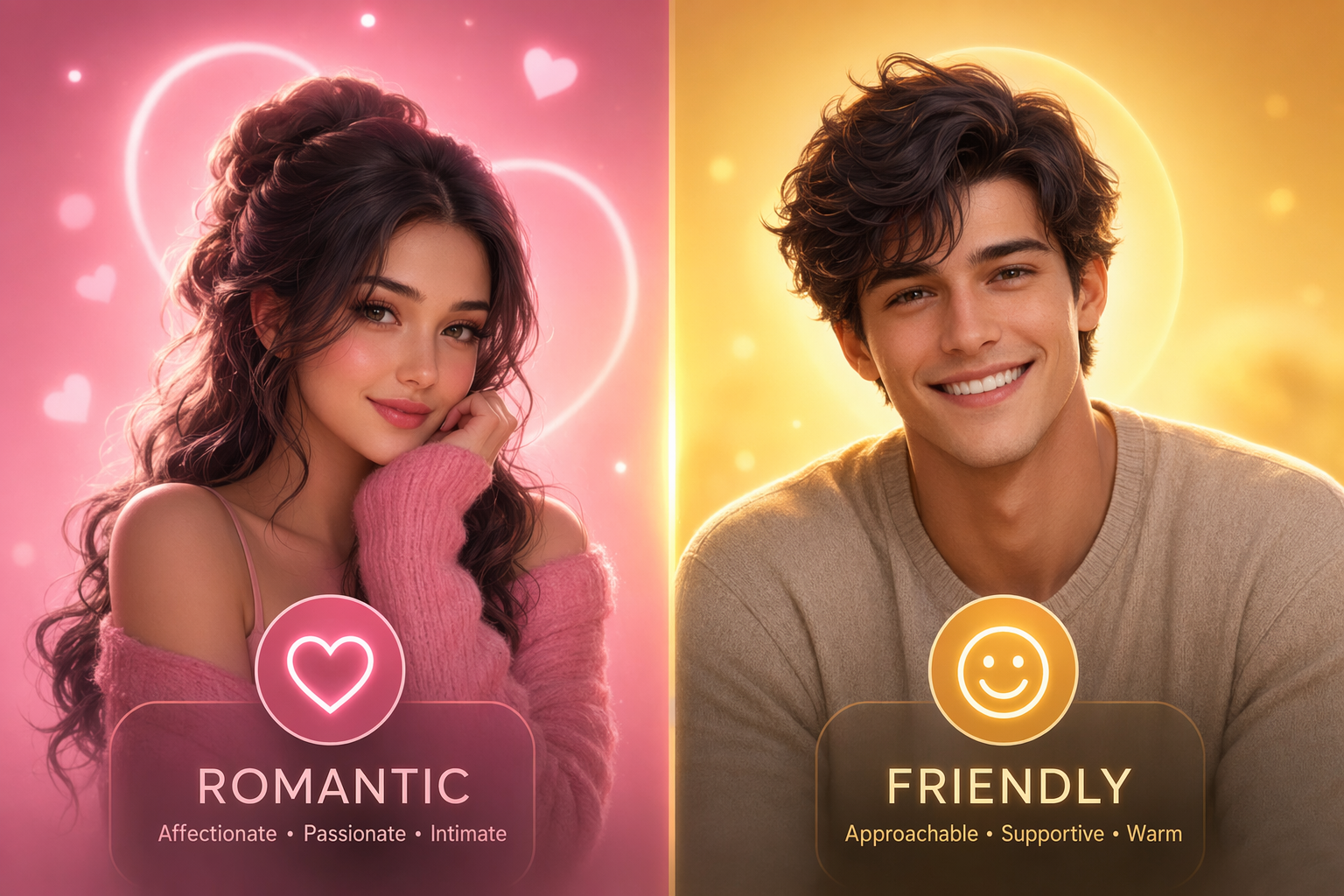
The terms "AI girlfriend" and "AI companion" get used interchangeably, but they actually describe different product approaches. Understanding the difference helps you pick the right app.
What Is an AI Girlfriend?
An AI girlfriend app is specifically designed for romantic interaction. The AI plays the role of a romantic partner — flirting, expressing affection, and simulating a dating or relationship experience. Apps like Candy AI, DreamGF, and Kupid AI lean heavily into this positioning.
What Is an AI Companion?
An AI companion is broader. It can be a friend, mentor, therapist-like figure, or romantic partner depending on how you interact with it. Apps like Replika, Nomi AI, and Veridia Games use this framing because they support multiple relationship types.
Key Differences
| Aspect | AI Girlfriend | AI Companion |
|---|---|---|
| Primary focus | Romantic relationship | Flexible relationship types |
| Tone | Flirty, romantic, intimate | Varies — supportive, friendly, romantic |
| Content | Often includes NSFW options | Usually more restricted |
| Use case | Romance simulation | Emotional support, friendship, romance |
| Examples | Candy AI, DreamGF, Kupid AI | Replika, Nomi AI, Veridia |
Which Is Right for You?
If you specifically want a romantic experience, AI girlfriend apps are more direct about it. If you want flexibility — sometimes romantic, sometimes just someone to talk to — AI companion apps give you more range. Many users start with one and end up trying both.
The Overlap
In practice, most apps blur the line. Replika started as a companion but added romantic features. Veridia is positioned as a companion but has strong romantic storylines. The label matters less than the actual features and experience.
Our recommendation: start with a companion app like Veridia or Replika if you're not sure what you want. You can always explore more focused AI girlfriend apps later.
Why the Label Matters Less Than the Defaults
The phrase AI girlfriend usually signals romantic defaults: flirtation, dating scenarios, visual customization, and sometimes adult content. AI companion usually signals broader defaults: friendship, support, journaling, coaching, or flexible relationship types. But the same underlying product can support both, so the label is only a starting point.
Look at the defaults instead. What does onboarding ask? What relationship types are offered? Does the app push romance, therapy-like support, roleplay, or media generation? The default path tells you more about the product than the category name on the homepage.