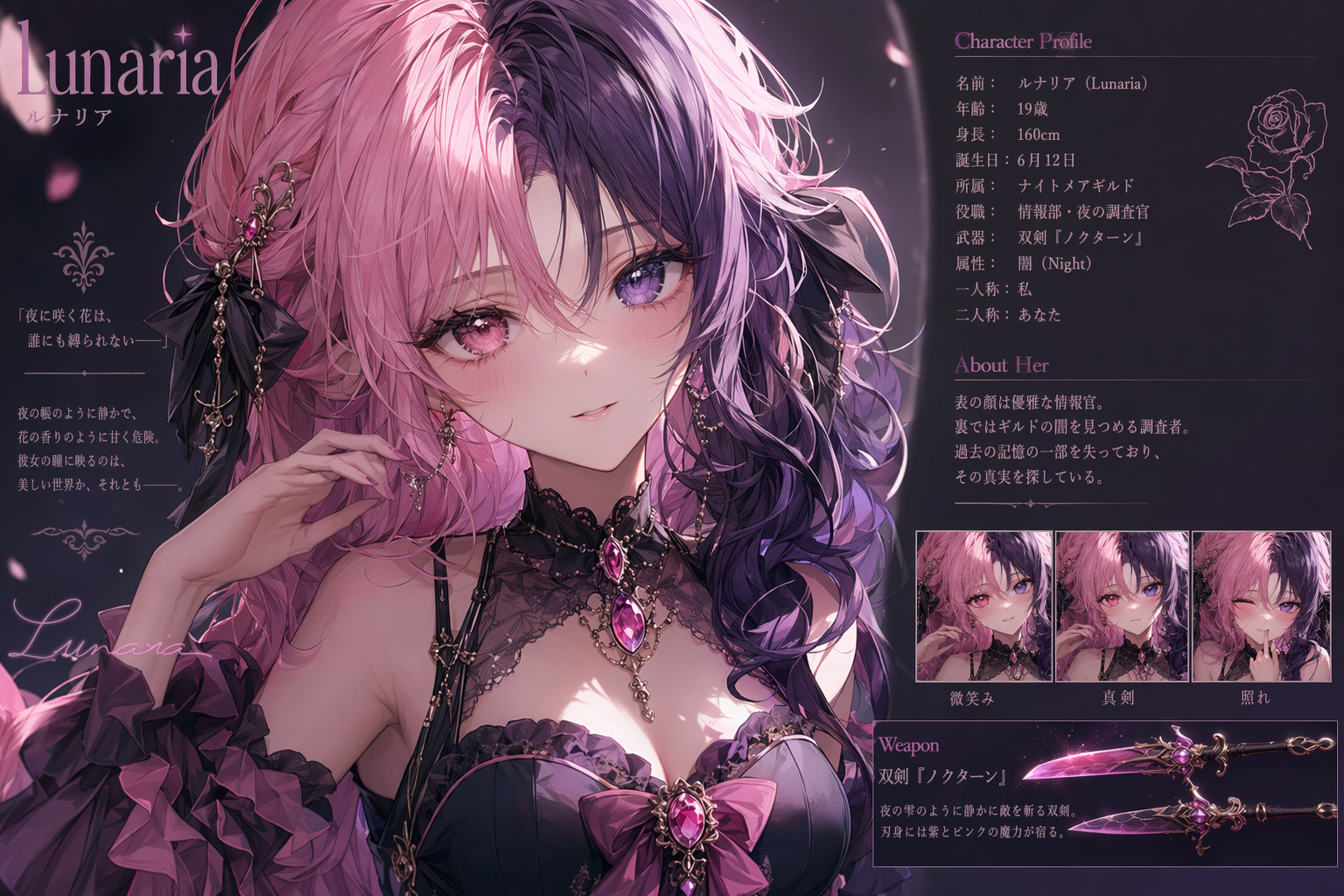
OpenAI released gpt-image-2 on April 21, 2026, and within hours it claimed the #1 spot on the Image Arena leaderboard by a 242-point margin — the largest lead ever recorded. We tested it specifically for generating AI companion and character art. Here's what we found.
What's New in GPT Image 2
The key upgrades relevant to character generation: native reasoning ("thinking") before drawing, 2K resolution output, multi-image consistency for generating the same character across different scenes, and dramatically improved text rendering. It also has a December 2025 knowledge cutoff, so it understands current character designs and aesthetics.
Testing for AI Character Art
We ran 50 character generation prompts through gpt-image-2, covering anime-style characters, realistic portraits, fantasy characters, and specific personality-driven descriptions (the kind you'd use for an AI companion profile).
What it gets right
- Consistency: The multi-image feature is a game-changer. You can generate the same character in different poses, outfits, and settings, and she actually looks like the same person. This was the biggest weakness of previous models.
- Detail accuracy: Specific features like "heterochromia eyes" or "scar on left cheek" are rendered correctly almost every time. Previous models would often ignore or misinterpret these details.
- Anime style: It handles anime aesthetics much better than gpt-image-1. Hair colors, eye styles, and proportions are more consistent with actual anime art conventions.
What it still struggles with
- Hands: Better than before, but still occasionally produces anatomical oddities in complex hand poses.
- Specific IP characters: It will refuse to generate recognizable copyrighted characters directly. You need to describe the traits without naming the character.
- Cost: At roughly $0.08-0.17 per image depending on resolution, generating dozens of character variations adds up fast.
Practical Use for AI Companion Apps
If you're creating a character profile for an AI companion app, gpt-image-2 is currently the best option for generating a consistent avatar. The workflow: describe your character in detail, generate 5-10 variations, pick the best one, then use the consistency feature to generate additional poses and expressions.
Verdict
GPT Image 2 is a genuine step change for AI character art. The consistency feature alone makes it worth using over alternatives for anyone who needs their AI companion to look the same across multiple images. It's not perfect — hands are still weird sometimes, and it won't generate copyrighted characters — but it's the best tool available right now for this specific use case.
Sources
- BuildFastWithAI — ChatGPT Images 2.0 Developer Breakdown
- FelloAI — ChatGPT Images 2.0 Analysis
- GeekVibesNation — GPT Image 2 Hands-On Testing
Character Art Needs Consistency More Than Surprise
For companion apps, image quality is only half the test. A beautiful one-off portrait is useful for marketing, but users care more about whether the same character still looks like herself after ten outfits, lighting conditions, expressions, and poses. Hair length, eye shape, facial proportions, age cues, and style drift matter because the image is part of relationship continuity.
The strongest workflow is reference-first: create a base character sheet, reuse it as the anchor, then ask for controlled variations instead of rewriting the whole prompt each time. Apps that expose this workflow feel more reliable than apps that simply sell AI photos as a token sink.